I'm moving to a brand new website and I couldn't be more excited!
You know what it's like to move to a new location; you get to decorate, add some color, and move things around until they're exactly the way you want them.
That's how it is on my new website, where you can leave comments, read my blog posts, and easily connect to my Facebook page, Twitter feed and Pinterest boards.
I hope you'll join me at my new home:
www.NancyLawrenceRegency.com
I'll have all my best things on display and you're welcome to visit often. See you there!
Saturday, August 8, 2015
Tuesday, July 7, 2015
Clueless is 20? I'm totally buggin!
Clueless is one of my favorite Emma adaptations. It's hard to believe it's been twenty years since the movie came out (of course, I was verrrrry young at the time).
I still love to watch this movie; its mix of snappy dialog, satire and sweetness still hold up today. There's a new book that dishes on all the behind-the-scenes details, from creating the fashions (which were practically movie characters themselves), to finding the film locations, to coming up with those signature catch phrases.
As If! by Jen Chaney is available now on Amazon and wherever books are sold. Click here to find out more.
Thursday, May 14, 2015
Welcome Princess Charlotte
(I thought I published this post back on May 6, but accidentally saved it as a draft, instead. I hate it when that happens.)
It's official. England's newest princess is named Charlotte Elizabeth Diana. Of course, that's the shortened version of her name. Officially, her name is registered as:
Here's the document that registered her birth:
I love the way the "Occupation" field was completed for Will and Kate. And though it looks like the registrar completed the form (the handwriting seems to match), HRH Prince William signed the form in field 14.
A new baby is always a blessed and thrilling event, but when the baby is a princess, too, it add a little extra touch of magic.
It's official. England's newest princess is named Charlotte Elizabeth Diana. Of course, that's the shortened version of her name. Officially, her name is registered as:
Her Royal Highness Princess Charlotte Elizabeth Diana of Cambridge.
Here's the document that registered her birth:
I love the way the "Occupation" field was completed for Will and Kate. And though it looks like the registrar completed the form (the handwriting seems to match), HRH Prince William signed the form in field 14.
A new baby is always a blessed and thrilling event, but when the baby is a princess, too, it add a little extra touch of magic.
Sunday, May 3, 2015
A Princess is Born!
I was traveling yesterday but managed to keep up with news about Britain's new princess. She looked like a little doll in her mother's arms.
Dad seemed pretty happy, too.
Now the big question is, what name will they give their new little princess? Odds are on Charlotte, which would go well with George . . . as the royal family demonstrated in the 18th Century.
You can click here to see a photo gallery of celebrations around Britain following the birth of the new princess.
Dad seemed pretty happy, too.
Now the big question is, what name will they give their new little princess? Odds are on Charlotte, which would go well with George . . . as the royal family demonstrated in the 18th Century.
![]() |
| King George III and Queen Charlotte with six of their children |
You can click here to see a photo gallery of celebrations around Britain following the birth of the new princess.
Wednesday, November 5, 2014
The Glorious Georges
I wish I were going to be in London this month so I could see the Historic Royal Palaces exhibit at Hampton Court, Kew Palace and Kensington Palace. The event marks the 300 year anniversary of the Hanoverian accession to the British throne.
Each location explores the life of a different monarch. King George I is featured at Hampton Court with objects and artwork that illustrates life in his Royal Court.
King George II is featured at Kensington Palace. Visitors are invited to "explore the sumptuously restored King’s State Apartments, gamble like a courtier, enjoy Georgian music and join Queen Caroline while her ladies dress her in her finery."
And Kew Palace features King George III's reign which saw many social changes and the rise of British industry.
If, like me, you can't jet off to London this month, reading about the exhibition will have to suffice. Fortunately, Historic Royal Palaces has created some entertaining additions to their website, including a short film about the exhibit, which you can view here: www.hrp.org.uk/georges
There's a lot to see and savor on this site. You can click through all the tabs and sub-menus to find little nuggets of Georgian factoids. And here's a link to one of my favorite pages under Hampton Court Palace: The Georgian Chocolate Kitchen. Be sure to scroll down to see the recipes at the bottom of the page and a video for making chocolate port. Yum.
![]() |
| King George I reigned from 1714 to 1727 |
King George II is featured at Kensington Palace. Visitors are invited to "explore the sumptuously restored King’s State Apartments, gamble like a courtier, enjoy Georgian music and join Queen Caroline while her ladies dress her in her finery."
![]() |
| King George II reigned from 1727 to 1760 |
If, like me, you can't jet off to London this month, reading about the exhibition will have to suffice. Fortunately, Historic Royal Palaces has created some entertaining additions to their website, including a short film about the exhibit, which you can view here: www.hrp.org.uk/georges
![]() |
| King George III reigned from 1760 to 1820 |
Monday, July 28, 2014
The Evolution of Love
It's no secret that I'm a huge fan of the old-fashioned traditional Regency romance. I devoured them back in the seventies, eighties, and nineties. My office bookcase still has a dedicated favorites shelf crammed with Regencies by Rachelle Edwards, Patricia Wynn, Elizabeth Mansfield, Joan Smith, and, of
course, the great
I often reread those traditional Regencies to
cleanse my palate after reading a spate of mysteries, thrillers, or
contemporary fiction.
What I like most about traditional Regencies is
their level of escapism. Although they’re grounded in historical fact, they’re
actually pure fantasy. A major component of the fantasy (as a general rule) is
the attractiveness of the hero and heroine. You know the Regency lingo: Nonpareil.
Diamond of the first water. Complexion like a damask rose. Regency heroines are usually
ravishing, spirited, and enchanting, with red lips, dark curling lashes, and
impossibly small waists. It’s part of the fantasy to read about a heroine that
I wouldn’t mind looking like myself, if given the chance.
Georgette Heyer certainly clothed her heroines
in beauty. Venetia was described as “a fine-looking girl; most would not have
hesitated to call her beautiful. It was not only the size and brilliance of her
eyes which excited admiration, or the glory of her shining guinea-gold hair, or
even the enchanting arch of her pretty mouth; there was something very taking
in her face which owed nothing to the excellence of her features; an expression
of sweetness, a sparkle of irrepressible fun, an unusually open look, quite
devoid of selfconsciousness.”
And Arabella was unquestionably the beauty of
the family, with “large, dark, expressive eyes, little straight nose, and
delicately molded lips” as well as a complexion that was “the envy of less
fortunate young ladies.” Arabella enchanted her admirers by a “deceptive air of
fragility, which inspired one romantically minded young gentleman to liken her
to a leaf blown by the wind.”
I’m not sure how Regency heroines evolved to
being such paragons of attractiveness. In Pride and Prejudice—the book that
originally inspired the Regency genre—Jane Austen describes her heroine in plainer
terms. Elizabeth Bennet, while certainly attractive, was not a beauty. Instead,
it was her sister Jane who was the acknowledged beauty of the family. When
Darcy sees her for the first time, he describes Elizabeth only as tolerable.
But that’s where the romantic fantasy of Pride
and Prejudice takes hold. As the story progresses and Darcy comes of know
Elizabeth, his feelings for her spark, then flame; and at the same time, the
author’s description of Elizabeth changes, too, almost as a reflection of Darcy’s
feelings. The more love he feels for Elizabeth, the more beautiful she becomes.
“Mr.
Darcy had at first scarcely allowed her to be pretty; he had looked at her
without admiration at the ball; and when they next met, he looked at her only
to criticize. But no sooner had he made it clear to himself and his friends
that she hardly had a good feature in her face, than he began to find it was
rendered uncommonly intelligent by the beautiful expression of her dark eyes.
To this discovery succeeded some others equally mortifying. Though he had
detected with a critical eye more than one failure of perfect symmetry in her
form, he was forced to acknowledge her figure to be light and pleasing; and in
spite of his asserting that her manners were not those of the fashionable
world, he was caught by their easy playfulness.”
By the
end of Pride and Prejudice, she is his “dearest, loveliest Elizabeth.” And that
brings me to the part of the fantasy I love the best . . . That every woman is
beautiful in the eyes of the man who truly loves her. It's that perfect ending that draws me back again and again to Pride and Prejudice, and to many of those romances still crammed on the bookshelf in my office.
Sunday, May 11, 2014
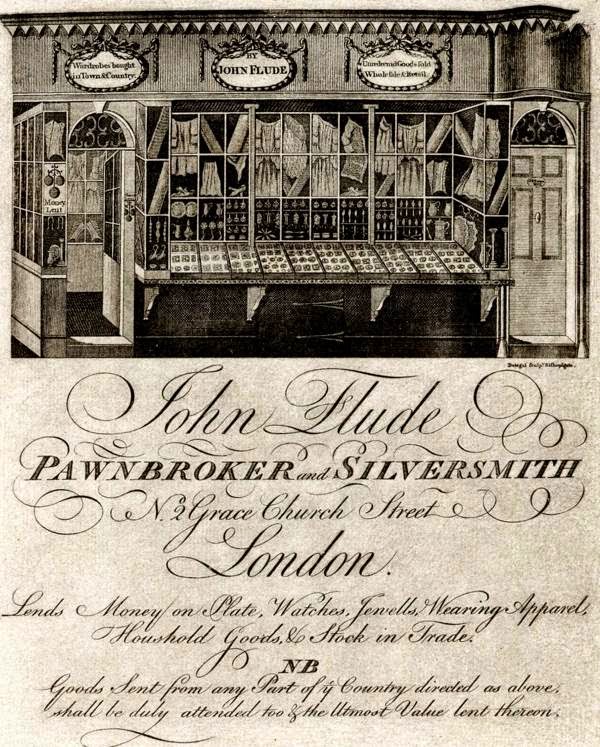
Old Trade Cards of London
Once again, The Gentle Author offers an extraordinary
post on his Spitalfields Life blog. The Gentle Author posts every day (earning
my admiration) and each post is filled with stories and artwork that inspire. Some of his posts have made me cry, while others have made me
laugh; but always, they cause me to slow down and take time to dwell on the beauty of the images
he shares.
His May 3 post is no exception. The topic is old trade cards of London. I’ve spent the last twenty minutes studying and admiring the art, language and lettering of the old trade cards he shared. You can view the full post here. While you’re there, be sure to subscribe to The Gentle Author’s blog, Spitalfields Life so you don’t miss any of his wonderful posts. You won't be disappointed.
Friday, January 24, 2014
The London Coffee House
I'd like to share with you one of my favorite blogs: Spitalfields Life. The author posts info about living in Spitalfields in the heart of London; but what makes this blog special is the way the author mixes the history of the area with modern times. One of this week's posts is a good example of that past-and-present mix. It features a marvelous map of historic coffee houses by artist Adam Dant, which, combined with text and accompanying photos, provides a thorough history and comfortable tour of London coffee houses.
![]() |
| Map copyright © Adam Dant |
Click on the map above to visit the site; and be sure to scroll all the way to the bottom of the page to see some of Adam Dant's other maps. I particularly love the maps of Clerkenwall, as seen in Tudor, Georgian, Victorian, and modern times.
If you visit the Spitalfields Life home page, you'll see that the author posts a new entry every day. I read each one for their charm, the history they impart, and the extraordinary stories they tell. I've read every one and have high hopes of feeling just like a Spitalfields native before too much longer.
If you love London history and you're fascinated by the modern London lifestyle, you'll find something to enjoy at Spitalfields Life.
Friday, January 17, 2014
Regency Bonnets and Caps
January 17 is Wear a Hat Day. Hats are not much in vogue in our modern times, but in Regency England, a stylish bonnet was an essential part of any lady's ensemble when she stepped out of doors. Married women and ladies of a certain age (late twenties and older) wore caps indoors. Shopping for hats and caps and keeping up with trims and colors was de rigeur for ladies.
In Northanger Abbey, Isabella Thorpe told Catherine Morland, "I saw the prettiest hat you can imagine in a shop window in Milsom-Street just now—very like yours, only with coquelicot ribbons instead of green; I quite longed for it."
Perhaps Miss Thorpe passed a shop that looked like the one represented in The Milliner's Shop by Alonzo Perez:
Here are different Regency-era bonnets, as depicted by various artists:
In Emma, Mrs. Elton accepts Mr. Knightley's invitation to be part of the party that will pick strawberries at Donwell:
In her letters, Jane Austen wrote about re-trimming a cap:
This cap is trimmed with lace and black ribbon:
By 1810 the plain cottage bonnet became more elaborate. Hats became higher and were decorated with more than fabric and ribbon. Hats sported flowers, puffed gauze, feathers, and gathered or plaited fabric.
This hat bears the fashionable poppy-red color Isabella Thorpe called "coquelicot" in Northanger Abbey:
In Mansfield Park, Miss Crawford explains to Edmund how easy it is to tell whether a woman is out in society based on her manners and her attire:
In Northanger Abbey, Isabella Thorpe told Catherine Morland, "I saw the prettiest hat you can imagine in a shop window in Milsom-Street just now—very like yours, only with coquelicot ribbons instead of green; I quite longed for it."
Perhaps Miss Thorpe passed a shop that looked like the one represented in The Milliner's Shop by Alonzo Perez:
![]() |
| Alonzo Perez |
In the first ten years of the 19th Century, the poke-bonnet gained popularity. In an 1801 letter, Jane Austen wrote that she had a new bonnet, trimmed with white ribbon:
"I find my straw bonnet looking very much like
other people's, and quite as smart."
![]() |
| Alfred Glendening |
![]() |
| Artist Unknown |
Leghorn hats were popular, featuring a large brim in front, and turned up behind in a soft roll in the French style, such as this bonnet: ![]() |
| Annie Henniker |
![]() |
| Carl Thomsen |
![]() |
| A. R. Kemplen |
![]() |
| F. Sydney Muschamp |
![]() |
| Carlton Alfred Smith |
![]() |
| Charles Haigh-Wood |
![]() |
| George Goodwin Kilburne |
![]() |
| George Engleheart |
![]() |
| Frederick Kaemmerer |
![]() |
| Frederic Soulacroix |
![]() |
| Daniel Hernandez Morillo |
In Emma, Mrs. Elton accepts Mr. Knightley's invitation to be part of the party that will pick strawberries at Donwell:
"It is to be a morning scheme, you know, Knightley; quite
a simple thing. I shall wear a large bonnet, and bring
one of my little baskets hanging on my arm. Here, —probably
this basket with pink ribbon. Nothing can be more simple, you see."
![]() |
| Edmund Blair Leighton |
In her letters, Jane Austen wrote about re-trimming a cap:
I shall venture to retain the narrow silver
round it, put twice round without any bow,
and instead of the black military feather shall
put in the coquelicot one, as being smarter.
This cap is trimmed with lace and black ribbon:
![]() |
| Edmund Blair Leighton |
This hat bears the fashionable poppy-red color Isabella Thorpe called "coquelicot" in Northanger Abbey:
![]() |
| Edmund Blair Leighton |
![]() |
| Daniel Hernandez Morillo |
"Till now, I could not have supposed it possible to be
mistaken as to a girl's being out or not. A girl not out has
always the same sort of dress: a close bonnet, for instance."
![]() |
| Frederick Kaemmerer |
![]() |
| George Sheridan Knowles |
Sunday, January 12, 2014
London Calling
My latest find is a 1953 magazine featuring information on the coronation of Queen Elizabeth II:
I was minding my own business, browsing through one of my favorite used book stores, when I was drawn to a stack of old National Geographic magazines. None of the NGs were very old, so I can't account for the reason I started digging through them, but wedged into the middle of a stack was this treasure!
Dated May, 1953, the cover features an illustration of the gold state coach. Inside is the BBC broadcast schedule so people could use it to follow the procession and coronation ceremony. I love it! It's now a little bit of English ephemera residing on my coffee table.
I was minding my own business, browsing through one of my favorite used book stores, when I was drawn to a stack of old National Geographic magazines. None of the NGs were very old, so I can't account for the reason I started digging through them, but wedged into the middle of a stack was this treasure!
Dated May, 1953, the cover features an illustration of the gold state coach. Inside is the BBC broadcast schedule so people could use it to follow the procession and coronation ceremony. I love it! It's now a little bit of English ephemera residing on my coffee table.
Tuesday, December 3, 2013
Wednesday, November 27, 2013
Thursday, October 31, 2013
It's All Hallows' Eve
Halloween is here and I'm ready to go. I have three of those big, warehouse-sized bags of candy to distribute to trick-or-treaters. Naturally, I've removed all of the Almond Joys; I need them to keep up my strength while I hand out the rest of the candy to the kids who knock on my door.
Like most holidays, Halloween can be inspiring to a writer. A few years ago, I wrote a Halloween-themed short story about a Regency kitten with some supernatural powers . . . at least, that's what the heroine believed. It was a fun story to write, with a doubting lord, an over-imaginative heroine, and things that go bump in the night (literally!)
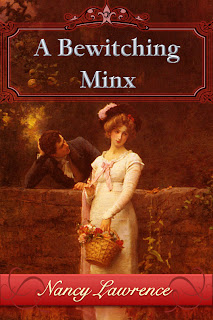
Originally included in a Zebra Regency anthology, the story is now available on Amazon, Nook, and other e-book outlets. Click on the book cover to read more or scroll down to read a preview.
I hope today's celebration fires your imagination to write, dream of romance, create a great costume, or do what you love to do best!
Here's the promised preview:
Sebastian Camerford, Lord Byefield looked into her eyes and knew he could not resist her. He had never been able to refuse her anything; not when she looked at him just so, with the light of anticipation in her eyes; not when she looked at him with that soft expression of pleading that had the power to melt his resolve as nothing else on earth could.
He should have scolded her. He should have explained to her in no uncertain terms that no female of his acquaintance was ever allowed to disrupt the solitude of his library. He should have told her how audacious and unladylike she was for daring to sit on his desktop, bringing her head level with his, looking him straight in the eye, as if she thought by doing so she could bend him to her will.
He should have done all those things, but he didn't. Instead, his stern, gray eyes met her blue eyes and he forced his brows together in a slight frown. "A kitten?" he repeated, discouragingly.
His gruff demeanor didn't fool her for a moment. She smiled slightly and returned his gaze with wide, unblinking eyes. "Yes, Uncle."
"And what, may I ask, makes you think I wish to spend my afternoon looking for a stray kitten?"
"Because it is the dearest little thing," she responded, with all the reasoning of a five-year-old. "I found it in your garden earlier and Mama said I might keep it, but when I tried to dress it properly for tea, it scampered away and I cannot find it anywhere!"
Since Sebastian was well acquainted with his niece's penchant for dressing in human attire any animal unfortunate enough to come within her orbit, it came as no surprise to him that one of the poor creatures had tried to escape. "The kitten sounds a very ill-mannered guest. Perhaps you should consider having your tea without it, Mary."
"No, Uncle, I cannot." There was the merest trace of a pout about her lips. "Truly, it is the prettiest little kitten I have ever seen, with white hair and blue eyes. I've never seen a kitten with blue eyes before, so I know it must be very special. Please help me find it. Please?"
Her voice held that pleading tone again; the same tone that, in one fell swoop, held the power to make him abandon all his plans for the afternoon and believe with all his heart that nothing was as important at that very moment as finding a kitten possessed of white hair and blue eyes.
Click here to read more with Amazon's "Look Inside" feature . . .
Like most holidays, Halloween can be inspiring to a writer. A few years ago, I wrote a Halloween-themed short story about a Regency kitten with some supernatural powers . . . at least, that's what the heroine believed. It was a fun story to write, with a doubting lord, an over-imaginative heroine, and things that go bump in the night (literally!)
Originally included in a Zebra Regency anthology, the story is now available on Amazon, Nook, and other e-book outlets. Click on the book cover to read more or scroll down to read a preview.
I hope today's celebration fires your imagination to write, dream of romance, create a great costume, or do what you love to do best!
Here's the promised preview:
A
Bewitching Minx
Sebastian Camerford, Lord Byefield looked into her eyes and knew he could not resist her. He had never been able to refuse her anything; not when she looked at him just so, with the light of anticipation in her eyes; not when she looked at him with that soft expression of pleading that had the power to melt his resolve as nothing else on earth could.
He should have scolded her. He should have explained to her in no uncertain terms that no female of his acquaintance was ever allowed to disrupt the solitude of his library. He should have told her how audacious and unladylike she was for daring to sit on his desktop, bringing her head level with his, looking him straight in the eye, as if she thought by doing so she could bend him to her will.
He should have done all those things, but he didn't. Instead, his stern, gray eyes met her blue eyes and he forced his brows together in a slight frown. "A kitten?" he repeated, discouragingly.
His gruff demeanor didn't fool her for a moment. She smiled slightly and returned his gaze with wide, unblinking eyes. "Yes, Uncle."
"And what, may I ask, makes you think I wish to spend my afternoon looking for a stray kitten?"
"Because it is the dearest little thing," she responded, with all the reasoning of a five-year-old. "I found it in your garden earlier and Mama said I might keep it, but when I tried to dress it properly for tea, it scampered away and I cannot find it anywhere!"
Since Sebastian was well acquainted with his niece's penchant for dressing in human attire any animal unfortunate enough to come within her orbit, it came as no surprise to him that one of the poor creatures had tried to escape. "The kitten sounds a very ill-mannered guest. Perhaps you should consider having your tea without it, Mary."
"No, Uncle, I cannot." There was the merest trace of a pout about her lips. "Truly, it is the prettiest little kitten I have ever seen, with white hair and blue eyes. I've never seen a kitten with blue eyes before, so I know it must be very special. Please help me find it. Please?"
Her voice held that pleading tone again; the same tone that, in one fell swoop, held the power to make him abandon all his plans for the afternoon and believe with all his heart that nothing was as important at that very moment as finding a kitten possessed of white hair and blue eyes.
Click here to read more with Amazon's "Look Inside" feature . . .
Thursday, September 26, 2013
Gentlemen, Place Your Bets!
Although the Prince of Wales claimed that gaming had never been one of his favorite vices, he rarely declined to indulge in the pastime when it was put before him. In his young days, he and his circle of noble intimates visited the most popular and most exclusive gaming establishments of the land: the gaming tables set up in the homes of some of London’s titled ladies.
In the 1790s, a handful of noble women with an eye to repairing their shattered fortunes, set up their own faro banks. Mrs. Strutt, Mrs. Hobart, and Lady Elizabeth Luttrell (the sister of the notorious Duchess of Cumberland) all set up gambling tables.
One of the most prominent men who fell under the spell of Lady Archer’s charms was the Duke of York, who it was said introduced the Prince of Wales to Lady Archer’s faro table.
The magistrates were not fooled by the
name on the license application and immediately whisked the case up to Lord Kenyon (at the time, Lord Chief Justice of England) to rule on the matter. Lord Kenyon had already made known
his disapproval of lady gamesters. “If any ladies of rank were convicted of
[gaming without a license] before him, they should stand in the pillory!” he
declared. In this case, however, with the name of the Prince of Wales looming
over his decision, he did not stand quite so firm. Instead, he referred the
matter back to the magistrates, trusting that “they would do their duty fearlessly
and refuse the license.”
But the magistrates, it seems, weren’t
any more willing than Lord Kenyon to take a stand against the Prince, and
before they could rule one way or another in respect to issuing a gaming
license to “Mr. Martindale,” Lord Kenyon received a rather spirited letter from
the Prince himself.
The Prince wrote: “As I am thoroughly persuaded that in the administration of justice the very last thing that could enter your lordship’s thoughts would be any remark that would fall from your lips to unwarrantably prejudice the public mind against an individual of any description whatever, I am confident that your lordship could never have used the expression which in the notion of every one so decidedly alludes to me . . . It is true that, from applications from many respected quarters, I have been induced to assent to my name being placed among others as a member of a new Club, to be instituted under the management of Mr. Martindale, merely for the purpose of social intercourse, of which I never can object to be a promoter, and especially as it was represented to me, that the object of this institution was to enable his trustees to render justice to various honorable and fair claimants. But if these were really your lordship’s words (which I cannot for a moment suppose) give me leave to tell you that you have totally mistaken my character and turn, for of all men universally known to have the least predilection to play, I am perhaps the very man in the world who stands the strongest and most proverbially so upon that point. I shall not trouble your lordship further upon this strange circumstance . . .”
Of course, the Prince did pardon him; and Lady Archer did, indeed, receive her license. Her “garden-parties” continued but private homes were not the only place a gentlemen of title and wealth could gamble. Gentlemen’s clubs offered a comfortable atmosphere where men could gather and talk a bit of politics, do a lot of drinking and engage in high-stakes gambling.
White’s was the quintessential London
club. It was difficult for a gentleman to gain entry and it was famous for its notorious betting book where
outrageous bets were recorded.
High stakes wagering went on at the
tables, too. In Days of the Dandies
Captain Gronow tells the story of General Scott, father-in-law of George Canning
and the Duke of Portland, who won £200,000 in one night at whist. George Harley
Drummond, of the famous banking-house, Charing Cross, lost £20,000 at whist to
Beau Brummell. As a result, Mr. Drummond was forced to retire from the
banking-house of which he was a partner.
At Brooks’s club the gambling stakes
were stratospheric. Charles James Fox, the great Whig politician was bankrupted
multiple times at Brooks’s tables. Lord Robert Spencer, brother of the Duke of
Marlborough, lost his entire fortune, down to the last shilling, then won it
back at faro. Lord Chalmondeley kept a faro bank at Brooks’s that was said to
have ruined half the town. A Mr. Paul, who returned home from India with a
fortune, lost £90,000 to the faro bank in one night. He immediately returned to
India to make another fortune.
In the 1790s, a handful of noble women with an eye to repairing their shattered fortunes, set up their own faro banks. Mrs. Strutt, Mrs. Hobart, and Lady Elizabeth Luttrell (the sister of the notorious Duchess of Cumberland) all set up gambling tables.
![]() |
| Lady Elizabeth Luttrell |
The most celebrated proprietress,
however, and the one who most often enjoyed the Prince’s patronage, was Lady Sarah
Archer. Lady Archer’s gaming establishment (which she euphemistically called a
“garden party”) hosted the most glittering members of the nobility, and she
knew how to attract gentlemen of fortune. She was a keen businesswoman who
shrewdly turned criticism to her advantage despite the fact that moralists of
the time charged that the ladies who frequented her tables served a more
iniquitous purpose (which, no doubt, increased her business considerably!). In The
Private Life of a King, John Banvard charged that Lady Archer’s Cyprians
were “training up to that character under the auspices of the patroness of the
night.”
“In all the arts and mysteries of love,”
Mr. Banvard declared, “she was acknowledged to be the paragon of the day.”
![]() |
| Lady Archer driving to the perfume warehouse in Pall Mall |
One of the most prominent men who fell under the spell of Lady Archer’s charms was the Duke of York, who it was said introduced the Prince of Wales to Lady Archer’s faro table.
It’s difficult to estimate the frequency
of the Prince’s visits to Lady Archer’s establishment; but her acquaintance
with the Prince blossomed to the point where she felt comfortably secure enough
to invoke his name whenever she thought it might do her some good.
When authorities began fining and
bringing charges against illegal gaming establishments, Lady Archer and Lady
Buckinghamshire (another noble woman who gave “garden-parties”) were two
proprietresses of the trade too conspicuous for the law to ignore. Lady Archer,
determined to keep her establishment open, applied to the magistrates for a
license under the name of Mr. Martindale (one of her more frequent customers)
and not-so-subtly hinted that the license had better be forthcoming because her
gaming rooms were patronized by the Prince of Wales.
![]() |
| King George IV when Prince of Wales |
![]() |
| The Gaming Table by Thomas Rowlandson |
The Prince wrote: “As I am thoroughly persuaded that in the administration of justice the very last thing that could enter your lordship’s thoughts would be any remark that would fall from your lips to unwarrantably prejudice the public mind against an individual of any description whatever, I am confident that your lordship could never have used the expression which in the notion of every one so decidedly alludes to me . . . It is true that, from applications from many respected quarters, I have been induced to assent to my name being placed among others as a member of a new Club, to be instituted under the management of Mr. Martindale, merely for the purpose of social intercourse, of which I never can object to be a promoter, and especially as it was represented to me, that the object of this institution was to enable his trustees to render justice to various honorable and fair claimants. But if these were really your lordship’s words (which I cannot for a moment suppose) give me leave to tell you that you have totally mistaken my character and turn, for of all men universally known to have the least predilection to play, I am perhaps the very man in the world who stands the strongest and most proverbially so upon that point. I shall not trouble your lordship further upon this strange circumstance . . .”
Lord Kenyon’s response to the Prince was
swift and apologetic: “I am confident that I meant nothing offensive to you . .
. May I presume to hope that your Royal Highness will pardon this trouble.”
Of course, the Prince did pardon him; and Lady Archer did, indeed, receive her license. Her “garden-parties” continued but private homes were not the only place a gentlemen of title and wealth could gamble. Gentlemen’s clubs offered a comfortable atmosphere where men could gather and talk a bit of politics, do a lot of drinking and engage in high-stakes gambling.
![]() |
| The Faro Table by James Gilray |
·
Horace Walpole wrote in 1744 about a recorded
wager of £1,500 that a human being could live under water for twelve hours.
·
Lord Alvanley wagered £3,000 (estimated
at over $100,000 in today’s economy) that one raindrop would beat another
raindrop to the bottom of the club’s famous bow window.
·
Lord Alvanley (again!) wagered Mr.
Talbot one hundred guineas to ten guineas that “a certain person understood
between them does not marry a certain lady understood between them in eighteen
months from this day, January 5, 1811.” The betting book indicates Lord
Alvanley won the wager.
![]() |
| Gambling Hell by Cruikshank |
![]() |
| Hard Hit by Sir William Quiller Orchardson |
Of course, no women were ever allowed
inside the hallowed portals of a Regency era gentleman’s club, so all accounts
I’ve read are from the man’s perspective. I used my imagination to fill in some
blanks when I wrote the gambling scenes in my book A Scandalous Season. The hero is the kind of high-stakes gambler who probably would have graced Lady Archer's faro table. Under the influence of a bruised ego and a
bottle of wine, he makes a foolish wager for a ridiculous amount, much like Lord Alvanley’s
wager with Mr. Talbot. Luckily, my hero is wealthy enough to cover his bet and
charming enough to win the heroine’s heart. Click here to read more about A Scandalous Season.
Additional
sources:
- George the Fourth; including His Letters and Opinions, with a View of the Men, Manners, and Politics of His Reign by Percy Fitzgerald.
- Huish’s Memoirs, George IV, Vol. 1 by Robert Huish.
- Social Caricature in the Eighteenth Century by George Paston.
- Western Argus, October 2, 1906, p. 44.
Wednesday, September 18, 2013
Glossy Olde England
My mail carrier is a wonderful man named Tony who has never once complained
about the vast poundage of glossy magazines he has to deliver to my house
every month. Most of the magazines I subscribe to are related to England and in
order to keep my supply coming, I bribe Tony with Starbucks gift cards, thank
you notes, and promises to keep my dogs locked up at scheduled times during the
day when there's a chance his mail truck is within a 15 mile radius of my
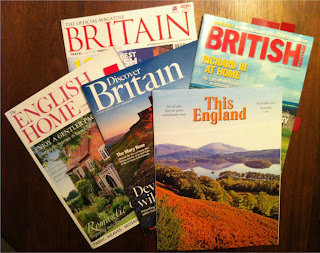
house.A friend once asked me which magazine about England was my favorite. I struggled to answer her question in the same way a mother struggles when someone asks which child is her favorite. After some thought and several minutes of indecision and flip-flopping, I finally narrowed my favorites down to five.
Why are they my
favorites? They all have stunning photography, entertaining articles, wonderful
style, and insights into English culture that are hard to come by in America.
Here's how they break down:
This magazine
is filled with page after page of wonderful interior and exterior shots of homes
set in ideal English locations. With every photograph I think to myself,
"Oh, yes, I could live here. Yes, I definitely could live here." I
love the look of today's English country house and this magazine indulges my
fantasy of living in a comfortable but perfectly decorated home that happens to
give a nod to a bygone time. Here are just a few of the topics covered in the
latest edition:
· A fourteenth-century manor
house
· A newly-built home decorated
in late Georgian/early Victorian styles
· An exploration of Durham in
north-east England
· Blending patterns,
texture, light and shade to create a modern romantic interior
With an eclectic and imaginative mix of articles, history, and
unique places to visit that are off the usual tourist track, this magazine
inspires my inner traveler. I usually read this magazine with a package of red
tape-flags at hand so I can keep track of the sites I "must
add" to my ever-growing list of places to visit on my next trip to
England. One of my favorite features: Each issue includes a list of novel
places to stay in the UK, from unique inns and hotels to country estates and
city townhouses. A few of the features from the last issue:
·
A tour of Abbotsford House, the home of Sir
Walter Scott
·
A feature on "Essential Lancashire"
that includes a guide to Blackpool, the fortunes of Georgian merchant families,
and walking in the footsteps of J.R.R. Tolkein
·
Aboard King Henry VIII's warship Mary Rose
·
Roald Dahl's writing hut
·
Touring an Edwardian English country garden
This is another magazine that ends up decorated with
multiple red tape-flags by the time I'm done reading each issue. Take the
latest (November) issue for example: it has an article on the discovery of the
remains of Richard III as well as a four-page, center-fold article on the
history of English puddings. Yum. And did I mention there were pictures of puddings? And can I just say that some
of those aforementioned pictured puddings were covered with awesomesauce
(commonly known as "custard")? Thanks to this educational article, I’m ambitiously planning to
expand my thinking beyond plum pudding for my 2013 Christmas celebration; I’m
currently hunting down recipes for Cumberland Rum Nicky, Spotted Dick and
Bakewell pudding. To give you an idea of this magazine's variety, the same
issue had an article on bike-riding through the Derbyshire Peak District and a
6-day guided tour from the Wye Valley to Shropshire. My favorite article in
this issue (aside from those four heavenly pages devoted to pudding) was a
feature on the old-fashioned way tweed is still made in the Outer Hebrides.
The lure of this magazine is that it provides a window into
the English lifestyle, past and present. It reminds me a little of Reminisce magazine because many of its
articles are written from the reader’s perspective. In the current edition, there’s
an article on the original WWII Land Girls, a tribute to Thackeray, and a
lovely two-page feature from a fledgling gardener as she readies her cottage
garden for winter for the first time. There’s also a charming article by a
woman who took a trip back to the old Essex childhood home her family lived in for
70 years, a list of favorite sandwiches submitted by readers, and a fun fact
page full of old English words, phrases and lingo.
By the way, what do you call a horse’s attempt to dump
his rider?
a) croupade
b) estrapade
c) caracole
d) ballotade
You’ll find the correct answer at the end of this post.
I love this publication because it demonstrates quiet
pride in its countrymen, honors its veterans, and unabashedly celebrates the
English way of life. There’s an unbelievable amount of information and charm in
every issue, along with beautiful photographs and Colin Carr’s delightful
artwork.
The publishers of Britain
bill it as “The Official Magazine.” It has my vote, too, for being the best guide
out there on what today’s England has to offer. Every issue is a traveler’s
dream, filled with tried-and-true as well as new-and-unique destinations to
visit. Want to experience London’s theatre district? There’s an article for
that. Wonder what the top 12 best British sites are that you absolutely must
experience? There’s an article for that. Where can you eat Dickensian-style
food in London? There’s an article for that, too. Add linger-over-every-image quality photographs
on each page and this publication makes you want to jump on the next plane
bound for Heathrow.
So now, I ask you: With such wonderful magazines coming
to my mailbox, how can I possibly choose a favorite? I can’t, but I can keep
plying my mail carrier with Starbucks gift cards and find creative ways to let him know I appreciate the care he takes in delivering my England magazines in pristine condition. Tony, your next latte’s on me.
Do you subscribe to magazines about England? What are your
favorite magazines and why?
Answer:
b) estrapade
Subscribe to:
Posts (Atom)